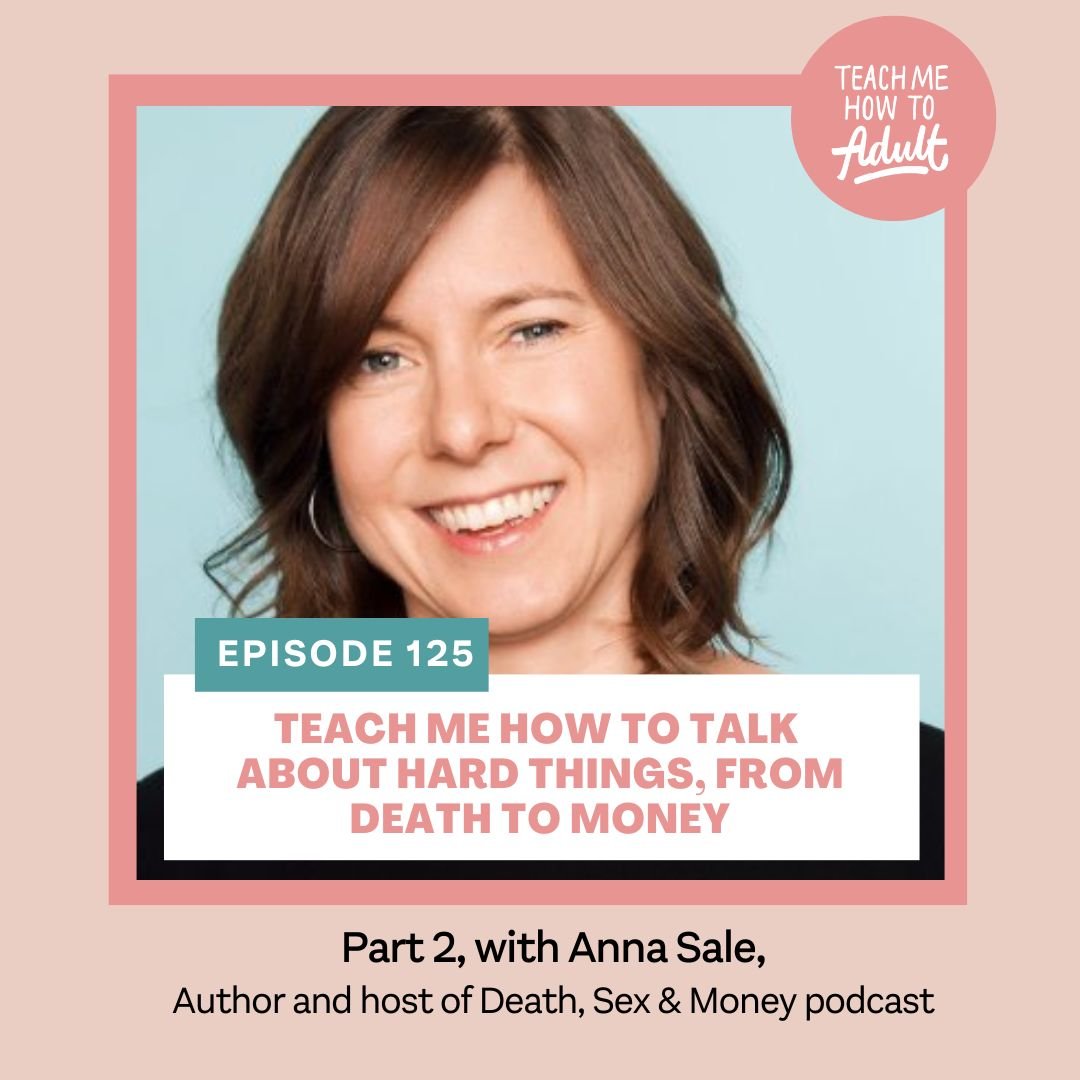
Ep. 256: How To Regulate Your Nervous System And Process Trauma using Somatic Therapy, with Therapist Simone Saunders
It’s World Mental Health Day this week, and we're having lots of important conversations to increase awareness around emotional wellbeing. I called in Trauma Therapist Simone Saunders to learn more about somatic therapy, how our mental health impacts our physical health, and how trauma and distress shows up in our bodies.

It’s World Mental Health Day this week, and we're having lots of important conversations to increase awareness around emotional wellbeing. I called in Trauma Therapist Simone Saunders to learn more about somatic therapy, how our mental health impacts our physical health, and how trauma and distress shows up in our bodies.
Anxiety and mental illness can show up in so many ways physically — from getting sweaty and experiencing heart palpitations or nausea, to general posture and shoulder stiffness, gut issues, and sleep problems. More and more we're seeing physical diagnoses like chronic pain and IBS linked back to trauma and nervous system dysregulation. And it doesn't always have to be a big T trauma... we talk a lot in this interview about how repeated micro traumas can build up to have the same impact.
So if you want to take control of your mental health and expand your techniques and awareness, this episode is a must-listen.
Simone has a Master's in Clinical Social Work, with a specialization in trauma, emotional regulation, anxiety and depression. As a trauma therapist and educator she has over 800,000 followers across her Instagram and TikTok accounts, the cognitive corner, where she helps people understand the connection between the mind and body and patterns that your nervous system engages in.
Tune in to hear more about:
Signs we might struggle to regulate our emotions and nervous system, and the best tools for nervous system regulation
The typical survival responses we cycle through when triggered
Navigating familial relationships or partnerships that trigger the dysregulation loop
Unhelpful coping strategies that might make you feel worse
Cognitive bypassing: The difference between intellectualizing and feeling
How trauma manifests physically
What if you can't remember your trauma?
Somatic therapy techniques and processing stored trauma
Building a life that's healthy for your nervous system
Navigating the loneliness and isolation on our mental health journey
Follow Simone on Instagram and TikTok.
Our show is produced by:
Gillian Berner, Host, Producer & Editor
Olivia Nashmi, Audio Engineer
Carolyn Schissler, Designer & Web Producer
Sara Valentine, Content Producer
For advertising and sponsorship inquiries, please contact Frequency Podcast Network.
PS: If you’ve been toying with the idea of launching a podcast but aren’t sure where to start or how to grow, check our consulting services at teachmehowtoadult.ca/howtopodcast!
If you have a topic you’d like us to cover or a guest you want us to interview, comment or DM us on Instagram:
Related Episodes:


Ep. 255: Build Your Mental Health Toolkit With 5 Expert-Backed Tips For Emotional Wellbeing
We’re heading into mental health awareness week, and these conversations are crucial as we face a global mental health crisis, with 1 in 3 people struggling with a mental health issue in North America.
We’re heading into mental health awareness week, and these conversations are crucial as we face a global mental health crisis, with 1 in 3 people struggling with a mental health issue in North America.
Almost every person I’m close with has been affected by mental health struggles, and I dealt with my own uncomfortable bout of anxiety and depression this September. During this tough month, I found myself referring back to some of the amazing tools and conversations I’ve had with guests on this podcast who shared perspective-changing insights that have changed my mindset and mental health.
These are a big part of my mental health toolkit that I draw from when I need reminders, support and tools to get me through a rough patch, and I'm glad I can share them with you today.
Tune in to hear advice from:
Mindset coach and bestselling author, Leisse Wilcox, on having agency over your response to life’s hardships, cultivating hope and optimism, and using your feelings as feedback.
Clinical psychologist, Dr. Lauren Cook, on identifying the Four Ds of Distress and when to seek help from a therapist, plus the truth about how nutritional deficiencies and gut health impact anxiety.
Psychotherapist and author, Whitney Goodman, on radically accepting your feelings and why we’ve been programmed to engage in toxic positivity.
Mindfulness expert and best-selling author, Nina Purewal, on navigating the chatty mind, dealing with stress spirals, why we’re addicted to negative thoughts, and CSI-ing the shit out of your thoughts.
If you’re struggling with your mental health, know that you’re not alone. Please find someone to talk to, and know that you are loved. I hope this mental health toolkit helps you as much as it’s helped me.
Our show is produced by:
Gillian Berner, Host, Producer & Editor
Olivia Nashmi, Audio Engineer
Carolyn Schissler, Designer & Web Producer
Sara Valentine, Content Producer
For advertising and sponsorship inquiries, please contact Frequency Podcast Network.
PS: If you’ve been toying with the idea of launching a podcast but aren’t sure where to start or how to grow, check our consulting services at teachmehowtoadult.ca/howtopodcast!
If you have a topic you’d like us to cover or a guest you want us to interview, comment or DM us on Instagram:
Related Episodes:
Episode 253: Is Life Speeding You By? Slow Down Time Using Novelty (And The Case Against Routine)
Do you guys feel like time keeps passing by faster the older we get? When we’re kids, summer stretches endlessly, and in adulthood, it’s gone in the blink of an eye. Today we’re diving into the intersection of time, memories, novelty and neuroscience to figure out how we can slow down our perception of time and make more memories.
Do you guys feel like time keeps passing by faster the older we get? When we’re kids, summer stretches endlessly, and in adulthood, it’s gone in the blink of an eye.
Today we’re diving into the intersection of time, memories, novelty and neuroscience to figure out how we can slow down our perception of time and make more memories. Enter: Liz Moody’s Novelty Rule. It turns out, when we’re learning and experiencing new things, we create new neural pathways, and time feels longer/slower.
As we get older and fall into rigid routines and monotony, we’re not laying down new neural circuitry, so everything blends together and we lose track of time.
So how do we stop time from flying by? Tune in to hear about:
The neuroscience of time perception
My relationship with routine and boredom
Explaining Liz Moody’s “Novelty Rule”
Easy ways to create weekly novelty
Applying dopamine menus to memory-making
Why Shared Experiences is a key Love Language
Keeping the spark alive in relationships with novelty
Tracking and scheduling your new novelty habits
Our show is produced by:
Gillian Berner, Host, Producer & Editor
Olivia Nashmi, Audio Engineer
Carolyn Schissler, Designer & Web Producer
Sara Valentine, Content Producer
For advertising and sponsorship inquiries, please contact Frequency Podcast Network.
PS: If you’ve been toying with the idea of launching a podcast but aren’t sure where to start or how to grow, check our consulting services at teachmehowtoadult.ca/howtopodcast!
If you have a topic you’d like us to cover or a guest you want us to interview, comment or DM us on Instagram:
Related Episodes:


Episode 239: How To Overcome Fear, Embrace The Cringe & Become A Confident Public Speaker, with Judi Holler
Public speaking is one of the most common anxieties — surveys show up to 75% of people fear public speaking. And that’s not the only thing fear holds us back from. Fear of judgment, failure, change, coming off as “cringe”… our fear of fear keeps us from reaching our full potential. But as today’s guest Judi Holler explains, our goal shouldn’t be to be fearless. The goal is to be courageous. To be scared, and do it anyway.
Public speaking is one of the most common anxieties — surveys show up to 75% of people fear public speaking. And that’s not the only thing fear holds us back from. Fear of judgment, failure, change, coming off as “cringe”… our fear of fear keeps us from reaching our full potential. But as today’s guest Judi Holler explains, our goal shouldn’t be to be fearless. The goal is to be courageous. To be scared, and do it anyway.
It’s hard to get uncomfortable, but it’s even harder to never try.
This interview is a must-hear pep-talk for reframing our relationship with fear, caring less what other people think, and building confidence so we can show up as our fullest selves. Whether you dream of a life on stage performing or delivering keynotes, or you want to be able to present at work or make a toast at a wedding without having a panic attack, becoming a confident public speaker and saying yes to scary things will level up your life.
Judi Holler is a keynote speaker, podcaster, best-selling author, and entrepreneur. She’s built a hugely successful keynote speaking business and a top 13% podcast on iTunes, sharing the power of the CEO mindset and her powerful talks for living a courageous life without regret. Judi has been featured in Forbes and Success Magazine, she’s a Second City Conservatory alumnae, and she is the hype girl that everyone needs in their corner.
Join us as we chat about:
How to exude confidence
Overcoming the fear of judgment to embrace the cringe
Reframing your relationship with fear
How to fear our fear less
The power of vulnerability
Judi’s steps for overcoming stage fright
How to prepare for a big presentation/performance
Should we show up before we’re ready?
What we can learn from the principles of improv
Our show is produced by:
Gillian Berner, Host, Producer & Editor
Olivia Nashmi, Audio Engineer
Carolyn Schissler, Designer & Web Producer
Sara Valentine, Content Producer
For advertising and sponsorship inquiries, please contact Frequency Podcast Network.
If you have a topic you’d like us to cover or a guest you want us to interview, comment or DM us on Instagram:
Related Episodes:
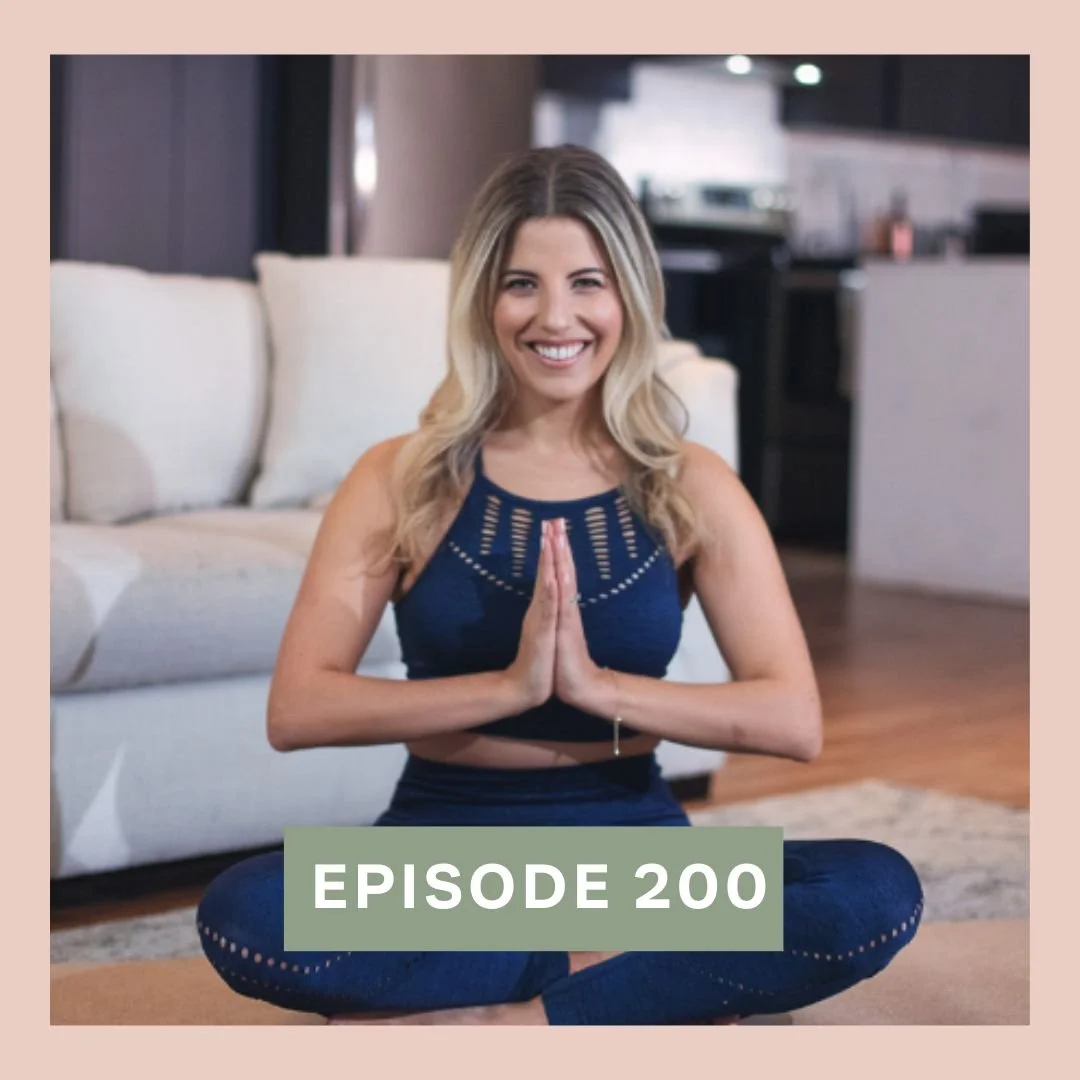
Episode 200: How to change your mind, navigate divorce, pivot your path and date with intention
Sometimes, you have to let go of something good to let in something great. It’s easy to feel stuck in the choices we’ve made — the job we worked hard to get, the relationship we’ve invested in, the city we chose — but life is not linear, and it’s okay to change your mind.

Sometimes, you have to let go of something good to let in something great. It’s easy to feel stuck in the choices we’ve made — the job we worked hard to get, the relationship we’ve invested in, the city we chose — but life is not linear, and it’s okay to change your mind.
In today’s juicy and vulnerable episode, we’re talking about the magic that can happen when you take the courageous, abundant path, instead of following “what we’re supposed to do.” I’m joined by Alessia Scauzillo, who is the embodiment of following your intuition, embracing the unknown, and pivoting towards the life you really want.
It can feel scary to break free from the traditional path, especially when we’re urged to keep up with the societal norms of chasing high-earning corporate careers and the marriage-house-baby trajectory, but that formula isn’t a reality for many of us, and there are so many exciting ways we can choose to live when we prioritize courage over comfort.
Alessia is the founder of A Sculpt Body, an online fitness platform and community of thousands of women. Alessia left her decade-long career in the finance world to build her fitness company after falling in love with wellness. She’s hosted over 20 sold out events with over 1,000+ women at top venues across Toronto, NYC and Miami. She’s regularly featured in media brands like Breakfast Television, We Met At Acme, and Business Insider as an expert in balanced wellness, navigating divorce and relationships, and creating your entrepreneurial dreams.
Tune in as we chat about:
What Alessia learned through her divorce and the realities of 'conscious uncoupling'
How to know when it’s time to leave... a job, a relationship, a place
Dealing with fear of regret and the unknown
Tapping into your intuition and learning to trust your gut
Dating with intention and confidence
There are still good guys out there!!!
Working out for mental clarity and living with balance
The power of your community during big transitions
How grief helped fuel Alessia's biggest life decisions
PS: If you’ve been toying with the idea of launching a podcast but aren’t sure where to start or how to grow, check our consulting services at teachmehowtoadult.ca/howtopodcast!
If you have a topic you’d like us to cover or a guest you want us to interview, comment or DM us on Instagram:
Related Episodes:


Episode 163: How Do I Maintain My Relationships When I Move Away?
It becomes increasingly tough to keep in touch as we get older (seriously, has anyone in their 30s tried to plan a group hangout recently!?) but it’s extra hard if you’ve moved away. And add a different timezone in there? Good luck.

It becomes increasingly tough to keep in touch as we get older (seriously, has anyone in their 30s tried to plan a group hangout recently!?) but it’s extra hard if you’ve moved away. And add a different timezone in there? Good luck.
But relocating is a fact of life in adulthood, and we don’t want our fears of losing touch with loved ones to hold us back from making an exciting move. So in this week’s episode of Asking For A Friend, we’re diving into all the strategies for maintaining your relationships while abroad, including the great tips we got from our followers on Instagram!
Tune in as we chat about:
How Cailyn has kept in touch, and what she wants to improve upon
Scheduling your catch-ups like non-negotiable meetings
Being thoughtful with milestones and big events (the good and bad ones)
Removing the guilt from a phone call hiatus
Communication methods for every personality type
Habit-stacking your Facetimes
The power of a friendship trip
Creating virtual experiences to share
We hope this helps you stay connected with your loved ones, no matter how far away they are. If you have any burning questions and want to get us in the hot seat, DM us and we’ll dive into them in an upcoming tell-all.
PS: If you’ve been toying with the idea of launching a podcast but aren’t sure where to start or how to grow, check our consulting services at teachmehowtoadult.ca/howtopodcast!
If you have a topic you’d like us to cover or a guest you want us to interview, comment or DM us on Instagram:
Related Episodes:

Episode 112: Asking For A Friend: How Do I Navigate Friendships When We’re All In Different Life Stages?
As we go through our 20s and 30s, we all start adulting in different ways and at different rates, and maintaining our ride-or-die connections can start to feel complicated. Navigating these different life stages means that our friendships sometimes end up at the bottom of the list, or we start growing in different directions and losing common ground. But every friendship goes through different seasons, and change doesn’t need to be a bad thing!

Picture this: You just turned 30. One friend just bought a home, while another is traveling the world. One is starting their own business, and one is skyrocketing up the corporate ladder. Some are getting married and having babies, and some are single AF. None of us can decide on a date to catch up, and where to go for dinner. So no one told you life was gonna be this way…
As we go through our 20s and 30s, we all start adulting in different ways and at different rates, and maintaining our ride-or-die connections can start to feel complicated. Navigating these different life stages means that our friendships sometimes end up at the bottom of the list, or we start growing in different directions and losing common ground. But every friendship goes through different seasons, and change doesn’t need to be a bad thing!
This week we’re tackling two juicy Qs: How to maintain our friendships when we’re at different life stages, and how to deal with comparison when those big milestones crop up.
Join us as we chat about:
How to stop comparing and start leading with curiosity
Getting rid of timelines and expectations for where you *should* be
Navigating feelings of isolation during a big life change
Why it’s as important to be there in the good times as it is in the bad
Celebrating your friend’s wins like they’re your own
Giving your friends the space to change and grow
Finding new ways to make memories together
How to communicate and self-regulate when your friendship dynamics shift
Bringing your people along for the journey
No matter where you’re at in life, your closest friendships are worth nurturing — they’re the family we get to choose! — and we’re choosing to fight for them.