
Episode 247: How To Hack Your Habits, Rewire Your Brain & Leverage Dopamine, with Neuroscientist Nicole Vignola
I don’t know about you, but no matter how old I get, September will always feel like that fresh back to school milestone where you get back into your routine and set new goals and habits. And today’s episode is a must-listen to help us get back on track — we called in the internet’s favourite habits and brain expert, neuroscientist Nicole Vignola.

Welcome back to the show!!! We have an incredible fall lineup planned, and I’m so glad you’re here.
I don’t know about you, but no matter how old I get, September will always feel like that fresh back to school milestone where you get back into your routine and set new goals and habits. And today’s episode is a must-listen to help us get back on track — we called in the internet’s favourite habits and brain expert, neuroscientist Nicole Vignola.
This interview is an empowering reminder that you are not stuck in your life. No matter where you’re at, you are capable of rewiring your brain and changing your life for the better. We’ve probably all said or heard, “I’m just wired this way.” But the science is in… and that’s not true. We can completely reshape and rewire our subconsciously programmed beliefs and change our thoughts, behaviours, and routines.
So today, we’re diving into·the science of breaking bad habits and how to make good ones, the principles of neuroplasticity and how to leverage it for positive change, neurohacks for changing our behavioural patterns, how to focus better and learn new skills, and how to improve our mental health by improving our brain health.
Nicole Vignola is a neuroscientist, keynote speaker, author and expert in organizational psychology who teaches people around the world about the science of human optimization, health and longevity, mental health, and peak performance.
Tune in as we learn about:
The principles of neuroplasticity
Why it feels so hard to make big changes
The anatomy of a habit, and the key to making a new habit stick
How long it takes to fully integrate new habits
Building a routine around time of day and your chemical reactions
The truth about negativity bias and positive reinforcement
Using big life changes as a catalyst
Reducing our phone usage
A genius way to break a bad habit
How dopamine impacts motivation and warps time
Boosting productivity by maximizing your mental currency
Why brain health is key for mental health
Nicole’s refreshing take on failure
Follow Nicole:
- Get her revolutionary first book, Rewire: Break The Cycle, Alter Your Thoughts and Create Lasting Change
- Follow Nicole on Instagram
- Check out her website
Our show is produced by:
Gillian Berner, Host, Producer & Editor
Olivia Nashmi, Audio Engineer
Carolyn Schissler, Designer & Web Producer
Sara Valentine, Content Producer
For advertising and sponsorship inquiries, please contact Frequency Podcast Network.
If you have a topic you’d like us to cover or a guest you want us to interview, comment or DM us on Instagram:
Related Episodes:


Episode 241: Stop Perfectionism With This Game-Changing Reframe On Success | I’m The Problem, It’s Me
I’ve always struggled with perfectionism and getting caught up in an endless cycle where no success is ever enough, I’m constantly dissatisfied with my achievements, and always in search of something I can’t grasp because I’m forever moving the benchmark of what success should be.

Today’s adulting confession: I have a toxic relationship with success.
Welcome back to another episode of “I’m the problem, it’s me,” where I call bullshit on myself for the things I’m getting wrong, so we can all learn from the struggle.
I’ve always struggled with perfectionism and getting caught up in an endless cycle where no success is ever enough, I’m constantly dissatisfied with my achievements, and always in search of something I can’t grasp because I’m forever moving the benchmark of what success should be.
I’ve learned that the antidote to this unachievable idea of success is (spoiler alert!) learning to embrace the journey, and find fulfillment in the doing.
Today’s episode dives into the game-changing reframe my amazing career coach gave me to help me redefine success and overcome my limiting beliefs. If you’re feeling stuck, this is a must-listen tool that has stopped everyone I’ve shared it with in their tracks.
Tune in to hear more about:
Perfectionism and defining your self-worth
Feeling dissatisfied with your successes
How my toxic ideas of success have held me back
The a-ha advice that reframed my idea of success
How I now define failure
Overcoming comparison and procrastination
The power of self-accountability for confidence and self-efficacy
You’ve got this!
Our show is produced by:
Gillian Berner, Host, Producer & Editor
Olivia Nashmi, Audio Engineer
Carolyn Schissler, Designer & Web Producer
Sara Valentine, Content Producer
For advertising and sponsorship inquiries, please contact Frequency Podcast Network.
If you have a topic you’d like us to cover or a guest you want us to interview, comment or DM us on Instagram:
Related Episodes:


Episode 239: How To Overcome Fear, Embrace The Cringe & Become A Confident Public Speaker, with Judi Holler
Public speaking is one of the most common anxieties — surveys show up to 75% of people fear public speaking. And that’s not the only thing fear holds us back from. Fear of judgment, failure, change, coming off as “cringe”… our fear of fear keeps us from reaching our full potential. But as today’s guest Judi Holler explains, our goal shouldn’t be to be fearless. The goal is to be courageous. To be scared, and do it anyway.
Public speaking is one of the most common anxieties — surveys show up to 75% of people fear public speaking. And that’s not the only thing fear holds us back from. Fear of judgment, failure, change, coming off as “cringe”… our fear of fear keeps us from reaching our full potential. But as today’s guest Judi Holler explains, our goal shouldn’t be to be fearless. The goal is to be courageous. To be scared, and do it anyway.
It’s hard to get uncomfortable, but it’s even harder to never try.
This interview is a must-hear pep-talk for reframing our relationship with fear, caring less what other people think, and building confidence so we can show up as our fullest selves. Whether you dream of a life on stage performing or delivering keynotes, or you want to be able to present at work or make a toast at a wedding without having a panic attack, becoming a confident public speaker and saying yes to scary things will level up your life.
Judi Holler is a keynote speaker, podcaster, best-selling author, and entrepreneur. She’s built a hugely successful keynote speaking business and a top 13% podcast on iTunes, sharing the power of the CEO mindset and her powerful talks for living a courageous life without regret. Judi has been featured in Forbes and Success Magazine, she’s a Second City Conservatory alumnae, and she is the hype girl that everyone needs in their corner.
Join us as we chat about:
How to exude confidence
Overcoming the fear of judgment to embrace the cringe
Reframing your relationship with fear
How to fear our fear less
The power of vulnerability
Judi’s steps for overcoming stage fright
How to prepare for a big presentation/performance
Should we show up before we’re ready?
What we can learn from the principles of improv
Our show is produced by:
Gillian Berner, Host, Producer & Editor
Olivia Nashmi, Audio Engineer
Carolyn Schissler, Designer & Web Producer
Sara Valentine, Content Producer
For advertising and sponsorship inquiries, please contact Frequency Podcast Network.
If you have a topic you’d like us to cover or a guest you want us to interview, comment or DM us on Instagram:
Related Episodes:
Episode 168: How To Fix Your Self-Talk (And Shut Your Inner Critic Up!)
How do you generally talk to yourself? Are you critical? Mean? Doubtful? A lot of us can be our own biggest bullies, but our self-talk is one of the most important factors in the quality of our lives, relationships, career, and happiness.

How do you generally talk to yourself? Are you critical? Mean? Doubtful? A lot of us can be our own biggest bullies, but our self-talk is one of the most important factors in the quality of our lives, relationships, career, and happiness.
Your thoughts become actions, and they can determine everything in your life. So it’s our job to recognize them, acknowledge them, and then kindly tell these limiting beliefs to eff off, because we’ve got this.
Tune in as we chat about:
Countering our inner critic with empathy
Tweaking our language to be more confident
Using cognitive reframing to shift out of negative thoughts
Fighting negative self-talk with facts
rethinking our idea of failure
Calling out your loved ones on their negative self-talk
Positive affirmations and helpful mantras
PS: If you’ve been toying with the idea of launching a podcast but aren’t sure where to start or how to grow, check our consulting services at teachmehowtoadult.ca/howtopodcast!
If you have a topic you’d like us to cover or a guest you want us to interview, comment or DM us on Instagram:
Related Episodes:
Episode 72: Teach Me How To Love My Body And Cultivate Confidence, with Roxy Earle | Summer Rewind
For the rest of the summer, we’re doing a Summer Rewind, re-releasing some of our must-listen episodes as we ramp up to the launch of season two. See you in September friends!
Summer can be a very triggering time for a lot of people when it comes to body image and insecurities. We polled you guys on Instagram about how you’re feeling in terms of confidence and self-acceptance, and we learned that we’re definitely not alone in this feeling. 76% of you said that summer triggers your insecurities, while 77% of you are feeling anxious about re-emerging from lockdowns with all the physical and mental changes we’ve undergone. 91% of you said that you struggle with negative self-talk, and we feel you...we can all be our own worst critics and bullies.
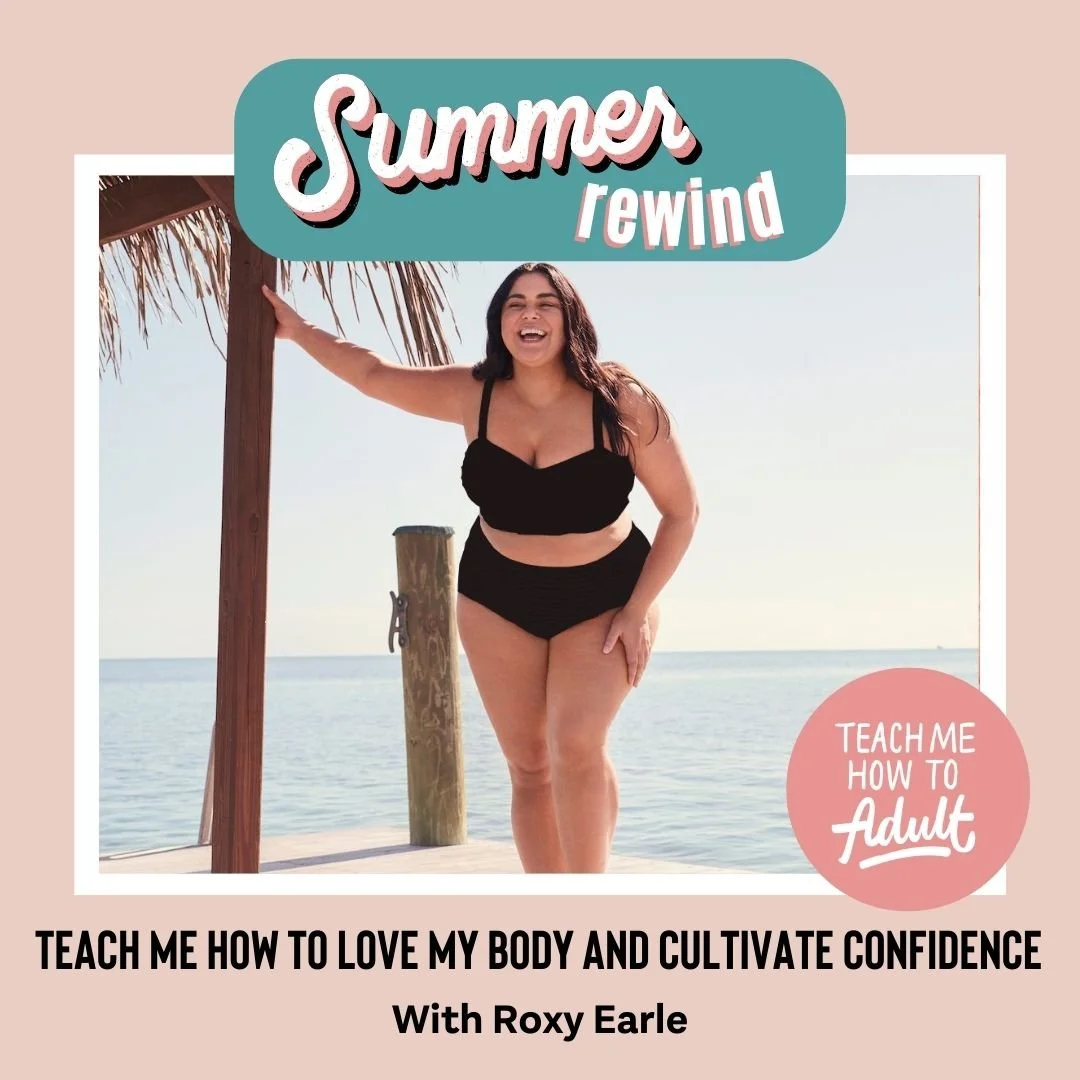
For the rest of the summer, we’re doing a Summer Rewind, re-releasing some of our must-listen episodes as we ramp up to the launch of season two. See you in September friends!
Summer can be a very triggering time for a lot of people when it comes to body image and insecurities. We polled you guys on Instagram about how you’re feeling in terms of confidence and self-acceptance, and we learned that we’re definitely not alone in this feeling. 76% of you said that summer triggers your insecurities, while 77% of you are feeling anxious about re-emerging from lockdowns with all the physical and mental changes we’ve undergone. 91% of you said that you struggle with negative self-talk, and we feel you...we can all be our own worst critics and bullies.
That’s why we called in body positivity activist and the Queen of confidence, Roxy Earle. We’re on a mission to help everyone (including ourselves) positively develop the single most important relationship we’ll ever have — our relationship with ourselves. And that requires unconditional self-love, compassion, gratitude and some helpful tools to get us out of negative spirals when we’re struggling with our self-esteem or body image.
Roxy is a former marketing professional turned model, entrepreneur, body positivity activist and a star on Real Housewives of Toronto. She started the #MySizeRox movement, which advocates that confidence comes in all shapes and sizes. She’s worked with brands like Knix, H&M, Le Chateau and Joe Fresh to bring more inclusive sizing and styles to their stores, and is launching the Ana App, which is a tool to increase positivity & confidence while also optimizing your health.
Join us as we chat about:
Gill’s mindset shift for dealing with negative spirals, finding pride and respect in herself, and abandoning clothing sizes
Cailyn’s newfound outlook on self-love & body image as a soon-to-be mom
The moment that inspired Roxy to start the #MySizeRoxs movement
How confidence became her secret sauce and how to cultivate it (hint: it’s not genetic, it’s accountability!)
Roxy’s tips for practicing positive self-talk and self-love daily
Why Roxy is advocating for inclusivity and representation in the fashion industry
How a gratitude practice can help you combat insecurities and change your life
Why filters and body contouring apps are unattainable, exhausting and quite honestly...boring!
The mindset shift to have a healthier relationship with your body
The importance of practicing and modelling self-love as a parent
The #1 tip for looking and feeling your best in photos
We hope this episode inspires you to wear the damn shorts this summer and to start loving yourself unconditionally. You deserve it. And if you need any support on your self-love journey, we’re here for you.
If you have a topic you’d like us to cover or a guest you want us to interview, comment or DM us on Instagram:
Related Episodes:
Episode 63: How To Be More Decisive
The one thing we all need to do literally every day is make decisions. So you made the right decision to listen to this one today! But for those of you plagued with indecision (like us) it can be a struggggle.
So here’s the tea: being decisive isn’t about being right, it’s about growing and learning from all of the possible outcomes. Plus making no decision is actually a decision — you’re choosing stagnation. So in this week’s episode we’re kissing our indecisiveness goodbye, so we confidently navigate our way through adulthood and get good at making decisions.
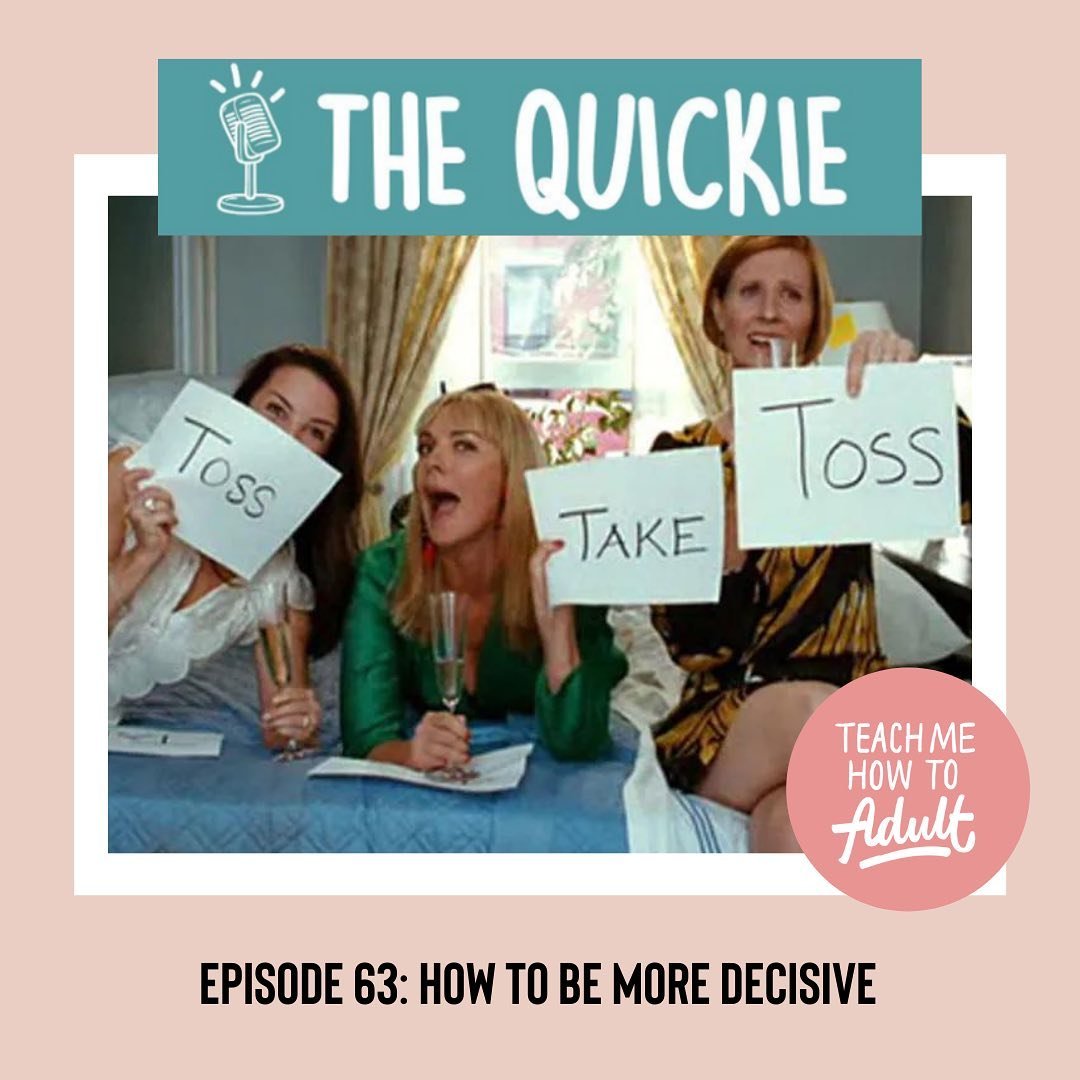
The one thing we all need to do literally every day is make decisions. So you made the right decision to listen to this one today! But for those of you plagued with indecision (like us) it can be a struggggle.
Analysis paralysis can mess with us when it comes to making big decisions about our careers, planning big events, and even smaller things like what to watch on Netflix or where to eat. We’ve allll been there.
But here’s the tea: being decisive isn’t about being right, it’s about growing and learning from all of the possible outcomes. Plus making no decision is actually a decision — you’re choosing stagnation. So in this week’s episode we’re kissing our indecisiveness goodbye, so we confidently navigate our way through adulthood and get good at making decisions.
Join us as we chat about:
Getting clear on YOUR desired outcome
How to be more confident in your decisions
Tips for avoiding choice overload
Why having perspective makes everything easier
The ultimate hack of time-boxing your choices
Breaking big decisions down into smaller decision trees
We hope this episode helps you slay your decisions with confidence!
If you have a topic you’d like us to cover or a guest you want us to interview, comment or DM us on Instagram:
Related Episodes:
Episode 62: How To Have More Energy
Let’s face it… life is exhausting, but that doesn’t stop the sun from rising every morning so it’s time we figured out how to hack the system and stay energized!
This week’s quickie is all about fighting fatigue and finding more energy so we can get sh*t done. So get caffeinated because we’re covering everything from the basics we’ve been known to ignore (has anyone ever slept for 8 hours?) to new tricks backed by the pros (hot tip: have more sex).

Let’s face it… life is exhausting, but that doesn’t stop the sun from rising every morning so it’s time we figured out how to hack the system and stay energized!
This week’s quickie is all about fighting fatigue and finding more energy so we can get sh*t done. So get caffeinated because we’re covering everything from the basics we’ve been known to ignore (has anyone ever slept for 8 hours?) to new tricks backed by the pros (hot tip: have more sex).
Join us as we chat about:
Why hydration is key
Using sunlight to our advantage
The surprising effect of spending time in nature
Micro-exercises and how they can help us
The impact of surrounding yourself with good energy
How sex effects our mental wellbeing
The perks of microdosing caffeine
We hope this episode helps boost your energy so you can do allll of the things!
If you have a topic you’d like us to cover or a guest you want us to interview, comment or DM us on Instagram:
Related Episodes:
Episode 61: We Turned Two! Our Biggest Life Lessons Learned
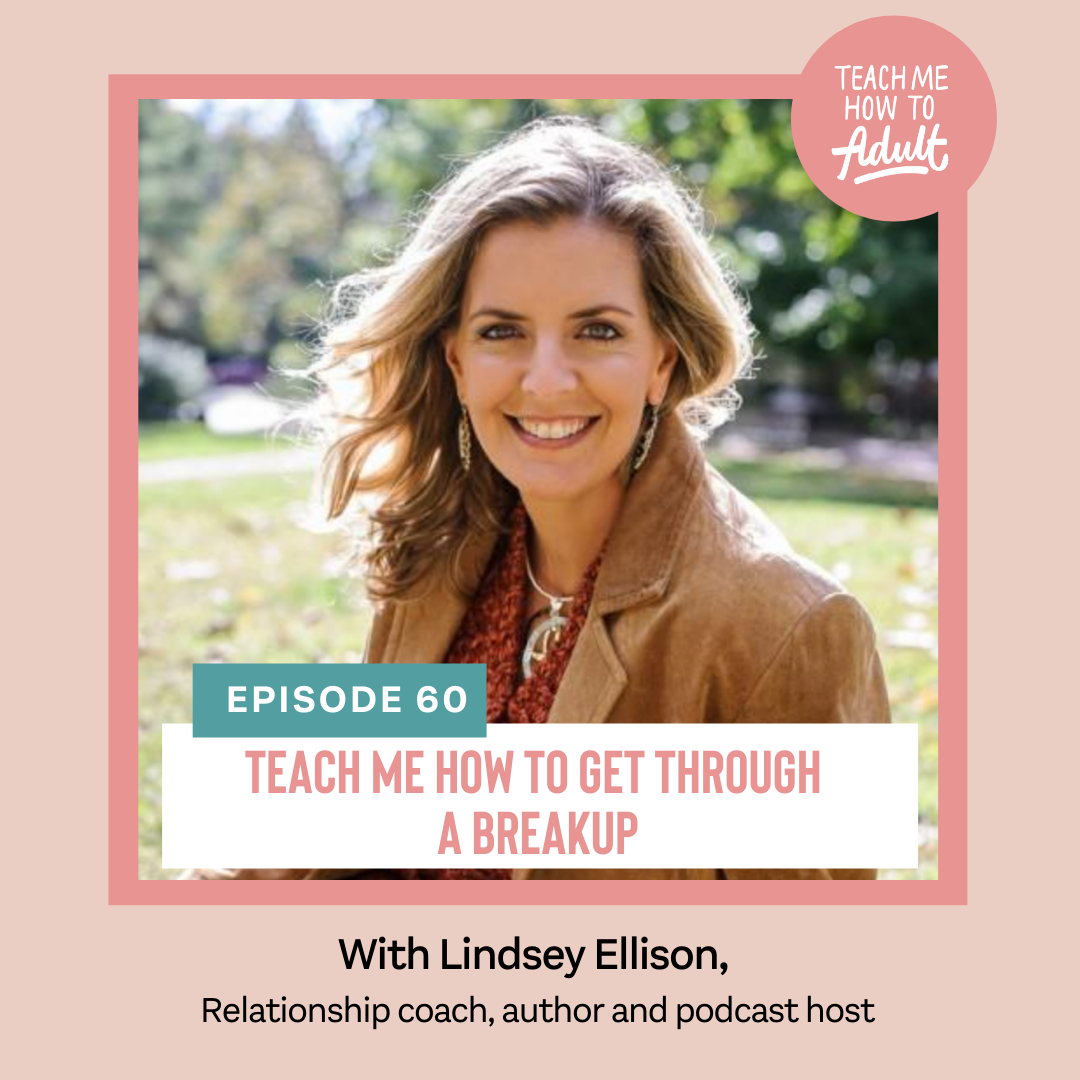
If you’re fresh out of a breakup and are feeling alllll of the feels, this one's for you. Navigating a breakup is never easy, but you’re far from alone. A study last year showed 25% of Canadians between the ages of 18-24 split up during the pandemic, and 5 million Canadians have experienced a recent breakup.
Experts say it can take 6-8 weeks to get over the initial intensity of heartbreak, but with a lack of access during lockdowns to the normal stuff we do to get over our exes, and an ongoing mental health crisis, the “getting over it” part has been hard lately. That leaves us with the inner work we have to do: Finding out who we are again, rewriting our narratives, filling that void, and loving ourselves first.
We called in breakup expert Lindsey Ellison to help us fall in love with our life again and manifest the dream partner that we deserve. Because when you can feel happy on your own, you're raising the bar for the next partner you bring into your life.
It’s Teach Me How To Adult’s two year anniversary and to celebrate, we’re switching things up a little! We have learned, and changed, so much since starting this podcast so this week we’re reminiscing and reflecting on some of the best advice from the experts we’ve interviewed.
From managing money and navigating friendships to improving our wellbeing and learning to love ourselves, this week’s quickie is an essential rundown of the lessons that have truly changed our lives.
Listen to our chat to learn more about:
Our quick takeaways on investing, negotiation and working out
The importance of friendships throughout different stages of life
How to hack your mindset to improve your life
The transformative power of finding confidence and self-love
Thank you so much for supporting us! We’d love to know what your biggest takeaway from the podcast has been.
If you have a topic you’d like us to cover or a guest you want us to interview, comment or DM us on Instagram:
Related Episodes:
Episode 40: How To Love Yourself More
If you have an idea that you can’t stop dreaming about, this week’s episode is the inspo you need. We chat with Ashley Freeborn, the founder and CEO of the renowned fashion brand Smash + Tess, about all things brand building, entrepreneurship, using fear to fuel your fire, and tapping your network to help get your idea off the ground.
You’ve probably seen people rocking Ashley’s rompers on instagram, or heard about her epic collabs with Jillian Harris, Sarah Landry of The Birds Papaya and Hilary Duff, just to name a few. Her brand started the #romperrevolution but here’s why we honed in on Smash + Tess for today’s episode: Ashley isn’t a serial entrepreneur or longtime business or fashion mogul, she just had an idea to fill a gap in the market, and made her dream a huge reality. What she created is so much more than a clothing company, it’s a community, a lifestyle and an inclusive brand that empowers women to live their best lives.

This episode is brought to you by Dove
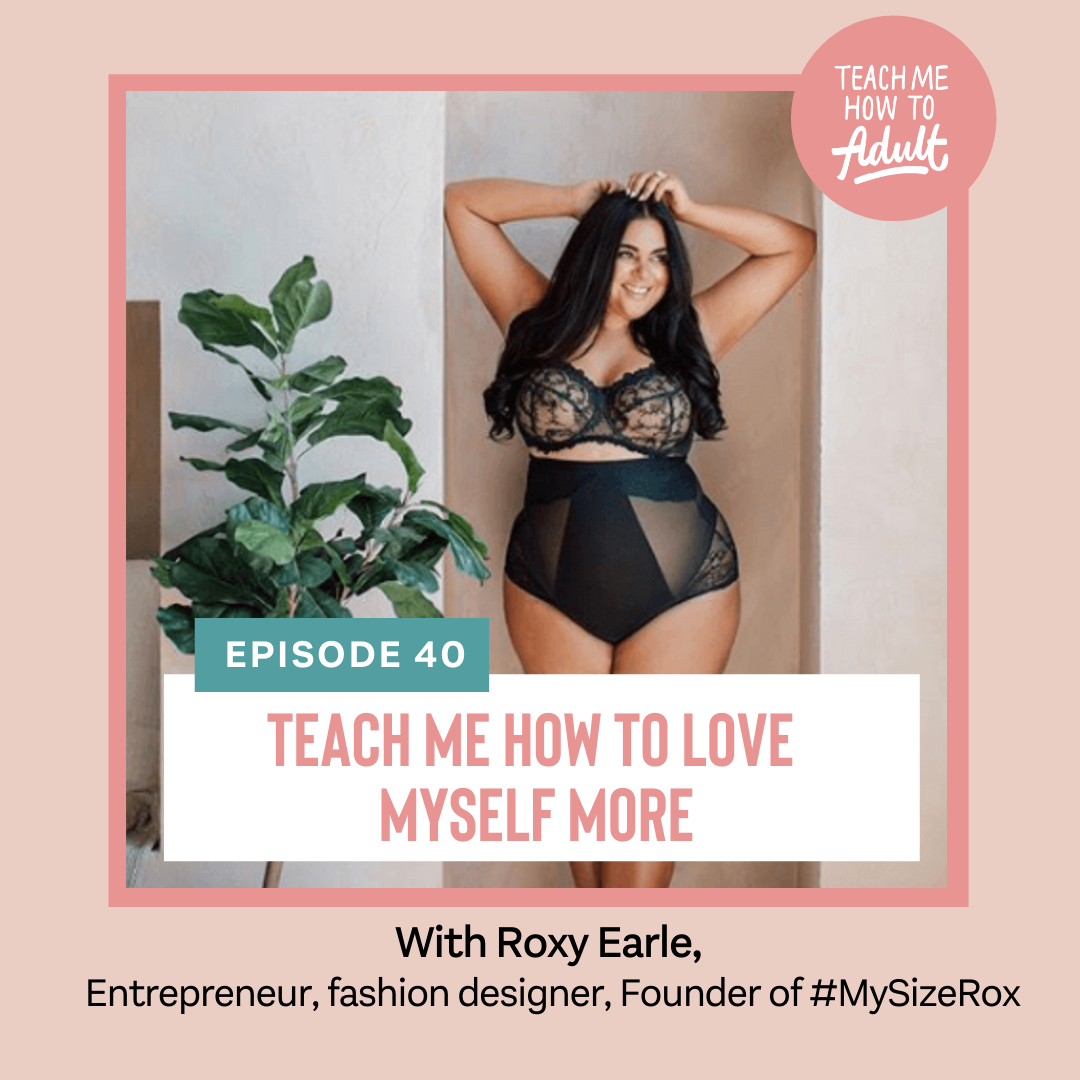
Vaxxed girl summer is in full swing, and there’s so much good energy and hope again! But summer can also be a very triggering time for a lot of people when it comes to body image and insecurities. We polled you guys on Instagram about how you’re feeling in terms of confidence and self-acceptance, and we learned that we’re definitely not alone in this feeling. 76% of you said that summer triggers your insecurities, while 77% of you are feeling anxious about re-emerging from lockdowns with all the physical and mental changes we’ve undergone. 91% of you said that you struggle with negative self-talk, and we feel you...we can all be our own worst critics and bullies.
That’s why we called in body positivity activist and the Queen of confidence, Roxy Earle. We’re on a mission to help everyone (including ourselves) positively develop the single most important relationship we’ll ever have — our relationship with ourselves. And that requires unconditional self-love, compassion, gratitude and some helpful tools to get us out of negative spirals when we’re struggling with our self-esteem or body image.
Roxy is a former marketing professional turned model, entrepreneur, body positivity activist and a star on Real Housewives of Toronto. She started the #MySizeRox movement, which advocates that confidence comes in all shapes and sizes. She’s worked with brands like Knix, H&M, Le Chateau and Joe Fresh to bring more inclusive sizing and styles to their stores, and is launching the Ana App, which is a tool to increase positivity & confidence while also optimizing your health.
Tune in as we chat about:
Gill’s mindset shift for dealing with negative spirals, finding pride and respect in herself, and abandoning clothing sizes
Cailyn’s newfound outlook on self-love & body image as a soon-to-be mom
The moment that inspired Roxy to start the #MySizeRoxs movement
How confidence became her secret sauce and how to cultivate it (hint: it’s not genetic, it’s accountability!)
Roxy’s tips for practicing positive self-talk and self-love daily
Why Roxy is advocating for inclusivity and representation in the fashion industry
How a gratitude practice can help you combat insecurities and change your life
Why filters and body contouring apps are unattainable, exhausting and quite honestly...boring!
The mindset shift to have a healthier relationship with your body
The importance of practicing and modelling self-love as a parent
The #1 tip for looking and feeling your best in photos
We hope this episode inspires you to wear the damn shorts this summer and to start loving yourself unconditionally. You deserve it. And if you need any support on your self-love journey, we’re here for you.
Follow Roxy:
Get the Ana App (coming soon):
This episode is brought to you by Dove. Visit teachmehowtoadult.ca/dove for details on how to try a free sample of their Deep Moisture Hand Sanitizer that we can’t stop raving about!
If you have a topic you’d like us to cover or a guest you want us to interview, comment or DM us on Instagram:
Related Episodes:


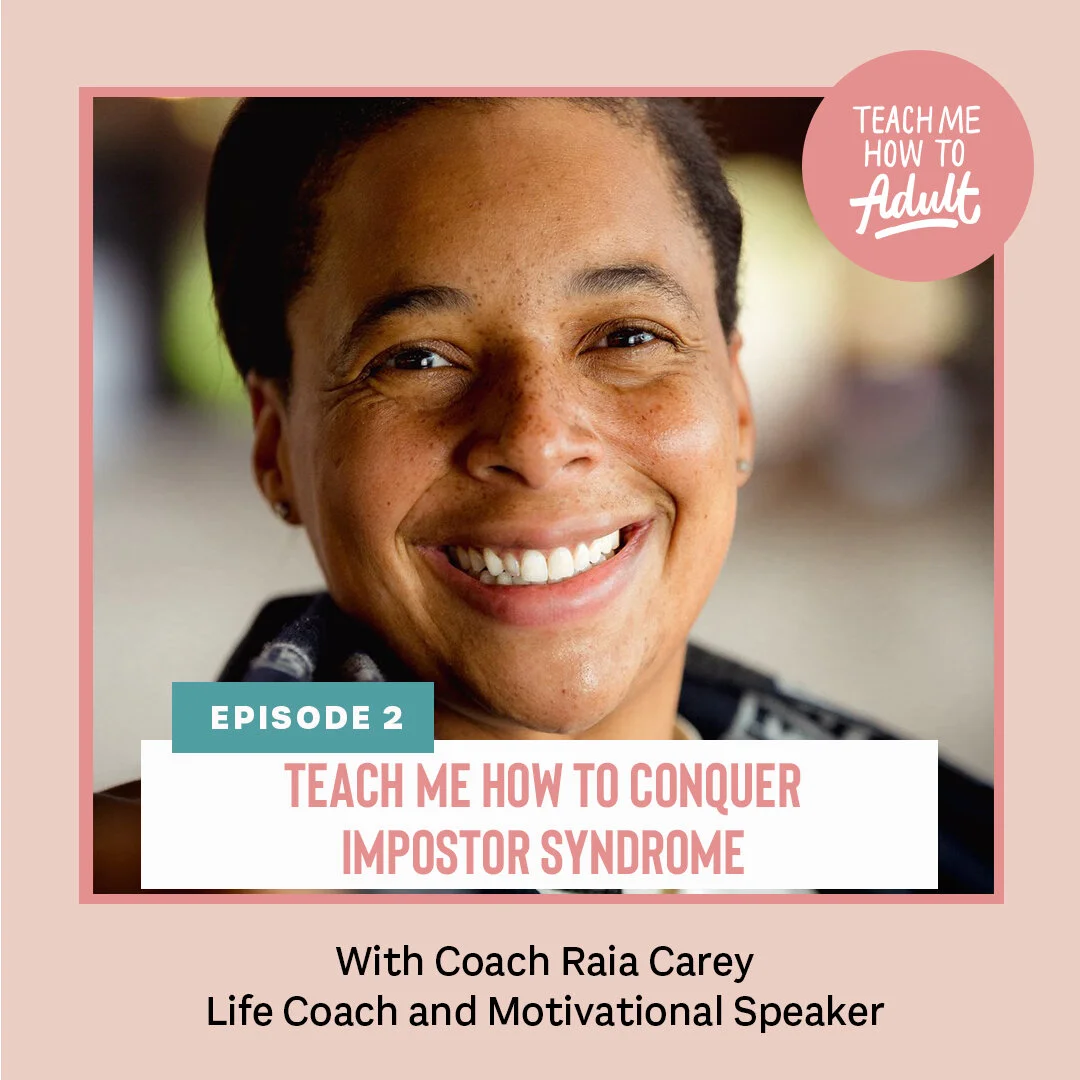
Episode 02: How To Gain Confidence and Overcome Impostor Syndrome
Raise your hand if you’ve ever felt like you’re not good enough, or that you don't deserve the job or promotion or opportunity that you’ve earned. That’s Impostor Syndrome talking, and most of us (70% of the population!) have experienced it at some point, in the workplace or our relationships or passions. It's super common among high achievers, creatives and women.
Raise your hand if you’ve ever felt like you’re not good enough, or that you don't deserve the job or promotion or opportunity that you’ve earned. That’s Impostor Syndrome talking, and most of us (70% of the population!) have experienced it at some point, in the workplace or our relationships or passions. It's super common among high achievers, creatives and women.
But fear not! Today we’re talking to the expert, Raia “Coach” Carey, who knows a thing or two about how to stop Impostor Syndrome in its tracks. She’s a 3x certified life coach and motivational speaker who specializes in confidence, visualization, and career coaching, and she gave us some FIRE strategies for gaining confidence and shutting down those doubtful voices in our heads.
What does Impostor Syndrome sound like?
One of the most common signs of Impostor Syndrome is that voice in your head that questions: “Who am I to do this?” It shows up as negative self-talk and doubtful narratives we plant in our minds. “It’s the language we use that reflects our lack of confidence,” says Coach Carey. “It’s like, ‘I don’t have any experience, so no one will ever hire me’.”
According to Coach Carey, Impostor Syndrome shows up in the places and spaces you need to be, “Deep down you know that’s where you need to grow, and it’s going to be uncomfortable. There’s something inside you that knows this is the exact kind of growth and challenge you need. Lean into that.”
The truth is, you don’t have to be perfect to be qualified or capable. That’s just a story we tell ourselves. “We want to be perfect before we inspire,” says Carey, “But it’s the imperfections that actually end up inspiring people.”
Signs that Impostor Syndrome is taking over can include burnout, avoidance, and an ongoing lack of fulfilment for perfectionists. It shows up as employees overworking themselves to compensate for a perceived deficit, taking on way too much to prove that they’re worthy. And it can lead to missed opportunities for people who are hella deserving.
The five types of Impostor Syndrome
Dr. Valerie Young has made a career of studying Impostor Syndrome, and she breaks it down into five different types, which helped us understand where and how Impostor Syndrome can creep up.
The Perfectionists: They have extremely high expectations for themselves, and even when they meet 99% of their goals, they still feel like failures.
The Experts: These folks feel like they need to know allllll the info before they’re willing to start a project, and they won’t apply for a job if they don’t meet every bit of criteria in the description.
The Natural Genius: They’re used to things coming easily to them, and when they have to put in more effort, their brain tells them that’s proof they’re an impostor.
The Soloists: These guys feel like they have to accomplish everything on their own, and that needing help makes them a failure.
The Superwoman/Superman: They push themselves to work harder than those around them to prove they’re not impostors. They need to succeed in all aspects of life, and feel stressed when they’re not the best at something.
If you identify with any of these, Coach Carey recommends trying to reframe these thought processes by questioning and countering them. For example, if you’re a soloist who needs to do everything on your own to feel worthy, challenge that idea by exploring the value of forming a mastermind group where you can gain info from other subject matter experts. You’ll likely end up finding empowerment in collaboration after all.
Strategies for overcoming it
“Everyday remind yourself that no matter where you are in life, you can always get to other places,” says Carey. “You have every single thing you need. You can make any change in your life if you take the time to figure it out.” Consider us inspired AF.
Watch how you talk to yourself. Negative self-talk leeches into your subconscious and your subconscious will focus on the harmful statements that hold the most power, like “I could never get that job,” or “I’ll never be beautiful enough to do that thing.” Your words shape your world, so be careful which ones you use. Write down or say positive affirmations out loud to replace those negative thoughts.
Coach Carey is even careful of how she talks about to-do lists. “To-do lists are a choose list. Every single day you get to choose what you do. We always have a choice.”
It can also help to have a positive mantra or quote to keep you going. Coach Carey’s is: “Embrace where you are today in life, knowing it’s not where you have to stay.”
Unpack yourself. Coach Carey recommends starting with the following four questions every night before bed:
What worked well for me today?
What didn’t work well for me?
What fuelled me?
What drained me?
After two weeks you’ll see patterns of what’s helping or hindering you. It helps to track your goals, momentum and behaviours so you can figure out what you want to change or do more of, so take conscious quality time with yourself to check in with no distractions.
Use visualization. Coach Carey uses visualization a lot to help her clients. Here’s what her approach looks like:
Start with imagining what your ideal life would look like if you could change anything you wanted. Let your imagination wander, picture what your day is like, how you are acting and feeling.
Break that down into three top “goals” or “wants” that you can work towards. These could look like a raise in your job, or living in a different city, or a better health and fitness regime.
From there, come up with action-oriented steps and tools you can implement to make those changes.
Ask yourself who is impacted by these changes you would make. Will your family be happier living in a better city? Will a shorter commute allow you to spend more time with your loved ones? This will help form your “why” that will motivate your goal.
Remember, the key to effective visualization is removing the barriers and mental blocks, and creating a safe space to imagine what your life could be like. Because everything you can imagine is possible. So imagine, then come up with the strategies and tools to implement.
Fight fiction with fact. When you’re feeling not good enough for something, make a list of all the things that prove you're just as qualified as anyone else. Get specific and include tangible results that support your value. And keep track of your wins! We naturally hold onto all the times we felt that we failed, but we should be focusing on the times we succeeded. Keep a document or Inbox folder of any praise, kudos and positive feedback that can remind you of your value.
Engage with your hobbies: Do the things that make you feel at your best, says Coach Carey. If you consistently show up feeling your best, you’re more likely to succeed in other areas of your life.
“We live in a time where we did all of our hobbies as kids, and then bills, work, school and society got us to stop,” explains Coach Carey. “But those are the things that truly bring us joy. And joy and happiness are different. Happiness you can find in almost everything, but joy you can only give to yourself.”
Dealing with Impostor Syndrome in your career
Impostor Syndrome can get in the way of pursuing promotions, new gigs and higher salaries or freelance rates. While most people focus on perfectionism and having all the experience before they pursue opportunities, Coach Carey says it’s not always about being the most experienced. “People are way more willing to follow a leader than a boss.”
“Vulnerability makes you way more relatable as a leader. We’re all learning, and people are way more willing to learn with you. Humility is what resonates,” she says.
And what if you don’t have all the answers or expertise in a job interview? Coach Carey suggests approaching an interview by saying: “That’s one area I’m not fully well-versed in, but I’m happy, motivated and willing to learn. I’ve already signed up for a course [to fill that knowledge gap]. If you already recognize the problem and come with solutions, I’d give you the job over the perfectionist.”
And when it comes to gaining the confidence to negotiate your pay, Coach Carey recommends figuring out what number you’d be really happy with, then adding onto that. Even if you just add $500-$1000. And if you get paid that much, the next time you can try adding more. Because you’ll deserve it.










I’ve been hitting a ceiling with my upper limits lately — in love, business, and life decisions, limiting beliefs and self-sabotage have been showing all the way up. So I revisited this episode with Lori Harder, and it was a powerful reminder of how to get out of my own way… it felt right to throw it back to this top-performing episode today for anyone who needs to hear this.